
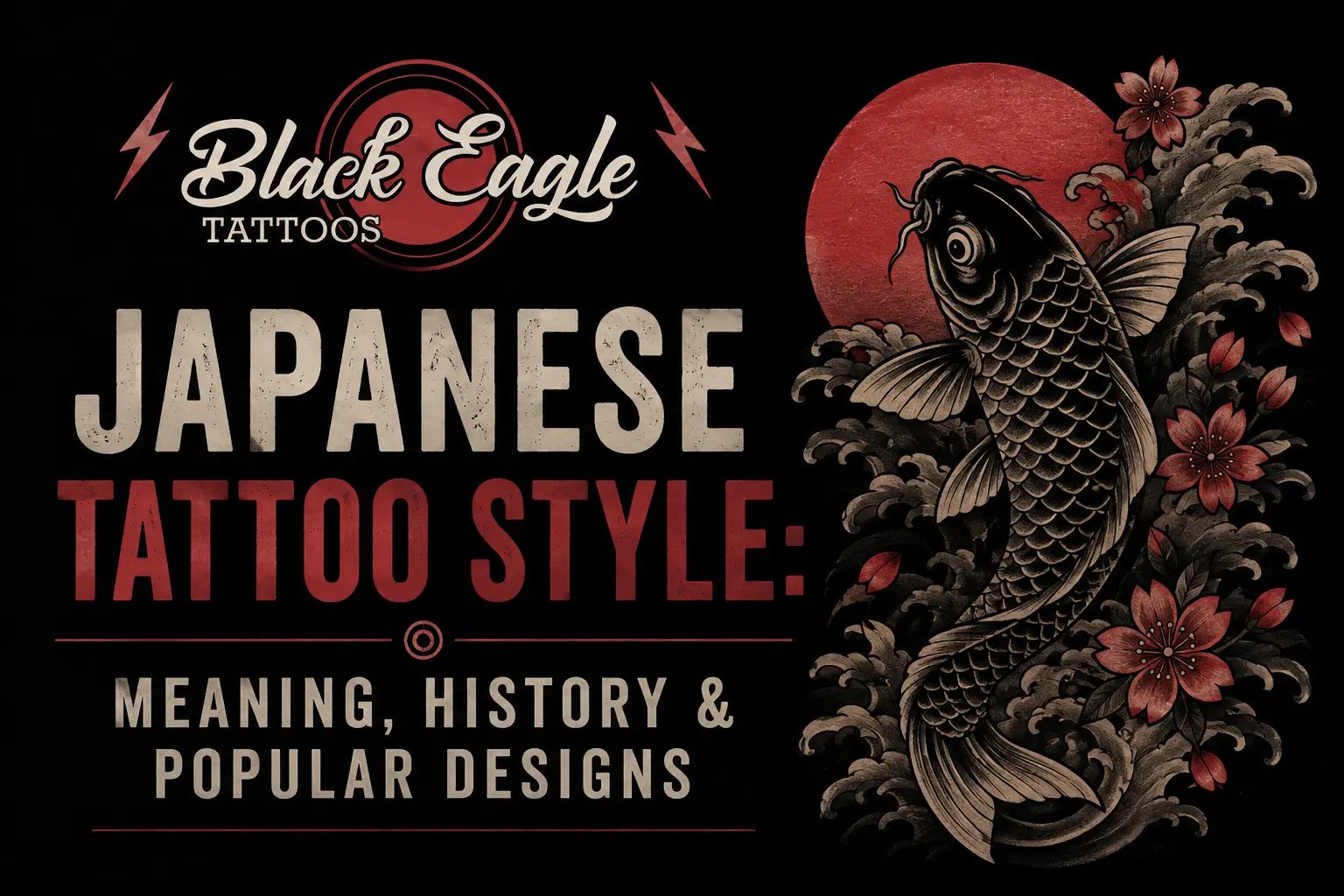
Few tattoo styles carry as much history and symbolism as traditional Japanese tattooing, known as Irezumi. With its bold outlines, flowing composition, and deeply symbolic imagery, it remains one of the most respected and requested styles in tattoo studios worldwide — including here in Sydney.
If you’re considering a Japanese-style piece, here’s what makes the style unique and what the most common designs actually mean.
A Style Built on Centuries of Tradition
Japanese tattooing dates back centuries, originally influenced by woodblock printing (ukiyo-e) and traditional Japanese art. What sets it apart from most other tattoo styles is composition — Japanese tattoos are designed to flow with the body, often covering large areas like a full sleeve, back piece, or bodysuit, with background elements like waves, wind bars, and clouds connecting each central image.
This is part of why Japanese-style tattoos are rarely small, standalone pieces — they’re built as part of a larger visual story.
Popular Japanese Tattoo Motifs and Their Meanings
Koi Fish
The koi is one of the most requested Japanese tattoo designs, symbolising perseverance, strength, and overcoming adversity — based on the legend of a koi swimming upstream against a waterfall. A koi swimming upward often represents ambition and struggle; downward can represent having already achieved a goal.
Dragons
In Japanese tradition, dragons are protective and wise rather than purely fearsome. They’re associated with strength, wisdom, and good fortune, and are often paired with clouds or water in the background.
Cherry Blossoms (Sakura)
Cherry blossoms represent the beauty and fleeting nature of life — a reminder that beauty is powerful precisely because it doesn’t last forever. They’re one of the most popular background elements in larger Japanese pieces.
Foo Dogs (Shishi)
These guardian lion-dogs symbolise protection and are often tattooed in pairs, traditionally believed to ward off evil spirits.
Hannya Masks
Representing a jealous, vengeful female demon from Japanese Noh theatre, the Hannya mask is a striking, complex symbol — often interpreted as representing the duality of human emotion, particularly the transformation of pain into strength.
Why This Style Requires an Experienced Artist
Japanese tattooing is technically demanding. Because pieces are usually large-scale and designed to flow across the body as one continuous composition, the artist needs strong skills in:
- Bold, consistent linework that holds up over decades
- Balanced composition across large areas of skin
- Understanding of traditional colour palettes and shading techniques
- Knowledge of the symbolism, so each element is placed and combined correctly
A poorly planned Japanese tattoo can look disjointed once healed — this is a style where experience genuinely shows in the final result.
Is Japanese Style Right for You?
This style tends to suit people who:
- Want a large-scale piece rather than something small and standalone
- Are drawn to symbolism and storytelling in their tattoos
- Appreciate bold, traditional artwork with a strong sense of history
- Are planning ahead — Japanese pieces are often built in sessions over time, especially larger sleeves or back pieces
Start Planning Your Japanese-Style Tattoo
If you’re drawn to the artistry and meaning behind Japanese tattooing, a consultation is the best place to start. Our artists can talk through composition, sizing, and how different elements — koi, dragons, waves, blossoms — can come together into one cohesive piece built specifically for your body.
📍 TATTOO SHOP, U35 – 7/11 Collaroy Street, Collaroy, Sydney NSW
📞 0452 496 663