
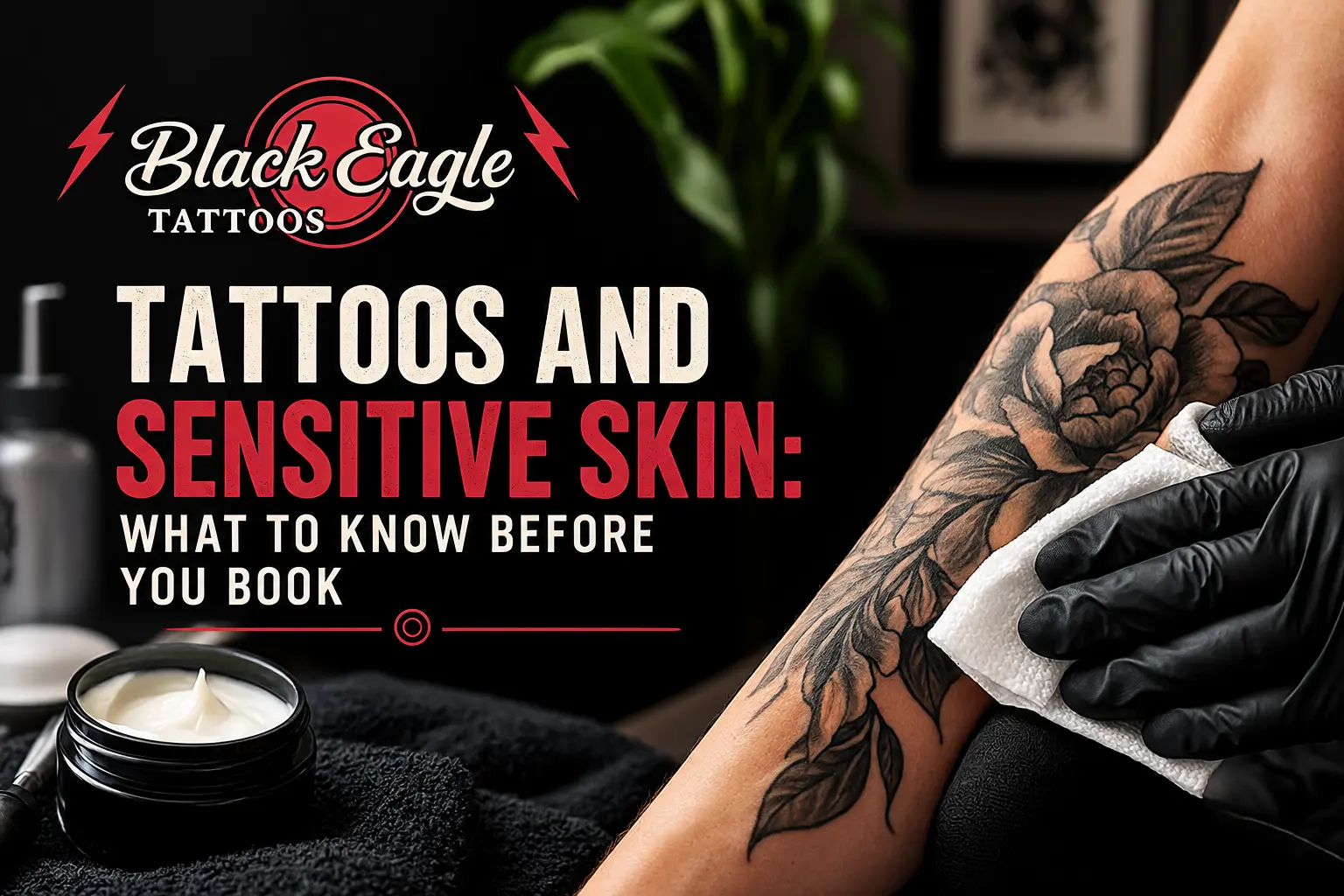
If you have sensitive skin, eczema, or a history of allergic reactions, you’ve probably wondered whether getting a tattoo is a good idea. The short answer: it depends on your skin and your situation, and the best approach is to plan ahead rather than assume either way.
This article covers general information only and isn’t medical advice. If you have a diagnosed skin condition or known allergies, speak with your doctor before booking.
Does Sensitive Skin Mean You Can’t Get Tattooed?
Not necessarily. Plenty of people with sensitive skin get tattooed successfully. What matters is the specific condition, how well it’s controlled at the time, and the preparation around the session. Some situations call for caution or a doctor’s input first, while others simply need a bit more care during healing.
Situations Worth Checking With a Doctor First
It’s sensible to get medical advice before booking if you have:
- Active eczema, psoriasis, or dermatitis in or near the area you want tattooed
- A history of allergic reactions to inks, metals, latex, or skincare products
- A condition that affects healing or the immune system
- A tendency to form raised scars (keloids)
- Any skin condition currently flaring up
Tattooing over skin that’s actively inflamed, broken, or irritated is generally avoided, since it can make both the session and the healing harder.
What to Tell Your Artist Before the Session
Being upfront during your consultation helps your artist plan properly. Mention:
- Any skin conditions, past or present
- Known allergies, including to latex, metals, or products you’ve reacted to before
- How your skin typically reacts to irritation or friction
- Any medications you’re currently taking that could affect healing
A good artist would much rather know in advance than find out mid-session.
Choosing Placement and Style With Sensitive Skin in Mind
Some areas are more prone to irritation than others, especially places with a lot of friction, sweat, or movement. If your skin tends to react easily, it’s worth discussing whether a calmer area makes sense, and how the size and detail of the design affect how much work the skin has to heal from.
Healing: Where Sensitive Skin Needs Extra Care
Aftercare matters for everyone, but it’s especially important if your skin is reactive:
- Follow the aftercare instructions you’re given closely
- Avoid adding new products to the area that your artist hasn’t recommended
- Keep the tattoo clean and protected from friction from tight clothing
- Avoid sun exposure and soaking the area while it heals
- Watch for signs of a problem beyond normal healing
When to Seek Medical Attention
Some redness and tenderness is a normal part of healing. But if you notice anything that seems to be getting worse instead of better, such as spreading redness, significant swelling, unusual heat, pus, fever, or severe itching, get medical advice promptly rather than waiting it out.
Planning a Tattoo With Sensitive Skin?
A consultation is the best place to start. Bring up your concerns early, and we can talk through placement, design, and what to prepare, so you walk in informed and comfortable.
📍 TATTOO SHOP, U35 – 7/11 Collaroy Street, Collaroy, Sydney NSW 📞 0452 496 663