Minimalist vs Large Tattoos: How to Decide
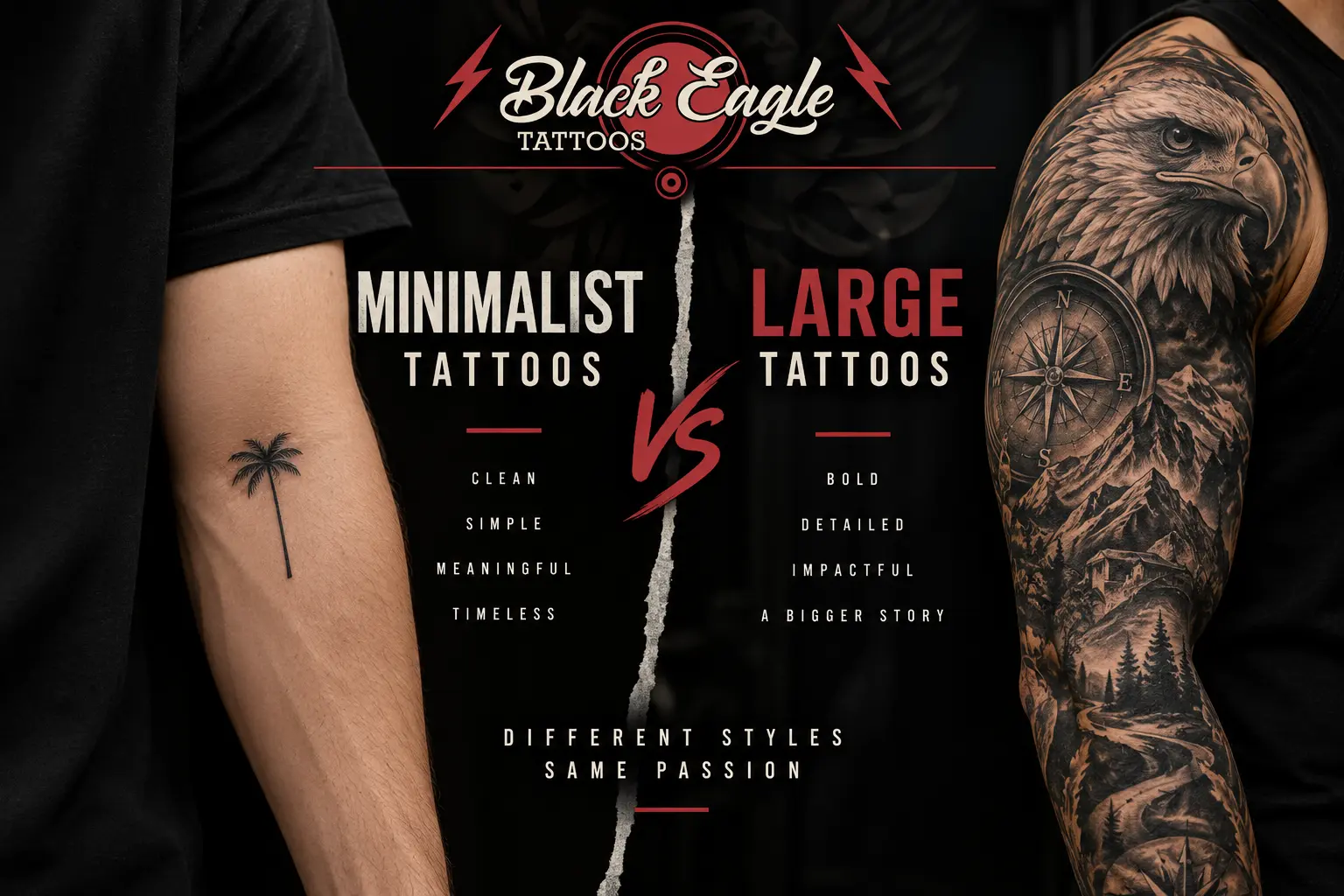
One of the first real decisions in planning a tattoo isn’t the design — it’s the scale. Do you want something small and understated, or a large, detailed piece that makes a statement? Both approaches work, but they come with genuinely different trade-offs worth thinking through before your consultation.
What Defines a Minimalist Tattoo?
Minimalist tattoos are built around simplicity — fine lines, small symbols, single-word lettering, or simple shapes, often without heavy shading or colour. The idea is that less detail can still carry meaning, sometimes more powerfully because of the restraint.
Minimalist tattoos are popular for:
- First tattoos, where a smaller commitment feels less intimidating
- Meaningful symbols or small lettering (initials, dates, single words)
- Discreet placements — wrist, ankle, behind the ear, ribs
- People who want a tattoo but not one that dominates their look
What Defines a Large-Scale Tattoo?
Large tattoos — sleeves, back pieces, thigh pieces — are built for detail, storytelling, and visual impact. They usually combine multiple elements into one composition (like Japanese-style pieces or realism portraits with detailed backgrounds), rather than a single simple symbol.
Large tattoos are popular for:
- Detailed styles like realism, Japanese, or traditional composition pieces
- Statement pieces meant to be seen and admired
- People who already have tattoos and are building out a larger concept
- Designs with real depth — multiple elements, background detail, shading
Key Differences to Actually Consider
Time and Sessions
A minimalist tattoo can often be finished in one short session. A large piece is usually completed across multiple sessions over weeks or months, especially for detailed styles like realism or Japanese work.
Cost
Larger pieces cost more overall — not just because of size, but because of the time and skill required for detail, shading, and composition across a bigger area.
Pain and Healing
Longer sessions on larger areas mean more cumulative discomfort, and larger tattoos generally take more care (and time) to heal fully compared to a small, simple piece.
How They Age
This is often overlooked: fine, minimalist linework can blur or fade faster over the years, especially on high-movement areas like fingers or wrists. Larger, bolder pieces — especially with strong black elements — tend to hold their shape and contrast better long-term.
Visibility and Commitment
A small minimalist tattoo is easy to place somewhere private and easy to build around later. A large piece is a bigger visual commitment — both in how visible it is and how much it shapes future tattoo decisions (a half-sleeve, for example, naturally invites the question of what comes next).
You Don’t Have to Choose Just One
Plenty of people start minimalist and build toward larger work over time — a small first tattoo that later becomes part of a bigger sleeve, for example. Thinking ahead about whether a small piece could later connect to something larger is worth discussing in your consultation, even if you’re not ready to commit to a big piece yet.
So, Which One Is Right for You?
Ask yourself:
- Am I looking for a quick, meaningful piece, or a long-term project?
- Do I want this to be a quiet detail, or a statement?
- Am I comfortable with multiple sessions and a bigger investment of time and cost?
- Could this be the start of something bigger later on?
There’s no wrong answer — both approaches are valid, and a good artist will help the design fit the scale that actually suits you, not the other way around.
Talk It Through With Us
Whether you’re picturing something small and simple or planning a large, detailed piece, our artists can help you scope out what’s realistic — in size, sessions, and cost — before you commit to anything.
📍 TATTOO SHOP, U35 – 7/11 Collaroy Street, Collaroy, Sydney NSW 📞 0452 496 663